In 2026, the internet is still flooded with content, but the real money is shifting toward practical, problem-solving tools that people actually use every day. Forget long blog posts that fight for every click. The smarter move is creating “boring” utility websites — simple online calculators, generators, and builders that deliver instant value. These sites attract high-intent visitors who stay longer, return often, and generate steady ad revenue through Google AdSense.
I’ve been following this model closely, and it’s one of the most realistic passive income strategies right now. You don’t need programming skills, huge budgets, or constant content creation. With AI website builders like Hostinger Horizons, you can launch a fully functional tool in hours. In this detailed guide, I’ll walk you through the complete strategy, real tool examples, traffic tactics, and what it really takes to earn consistent income in 2026.
Why Utility Websites Are Perfect for Passive Income in 2026
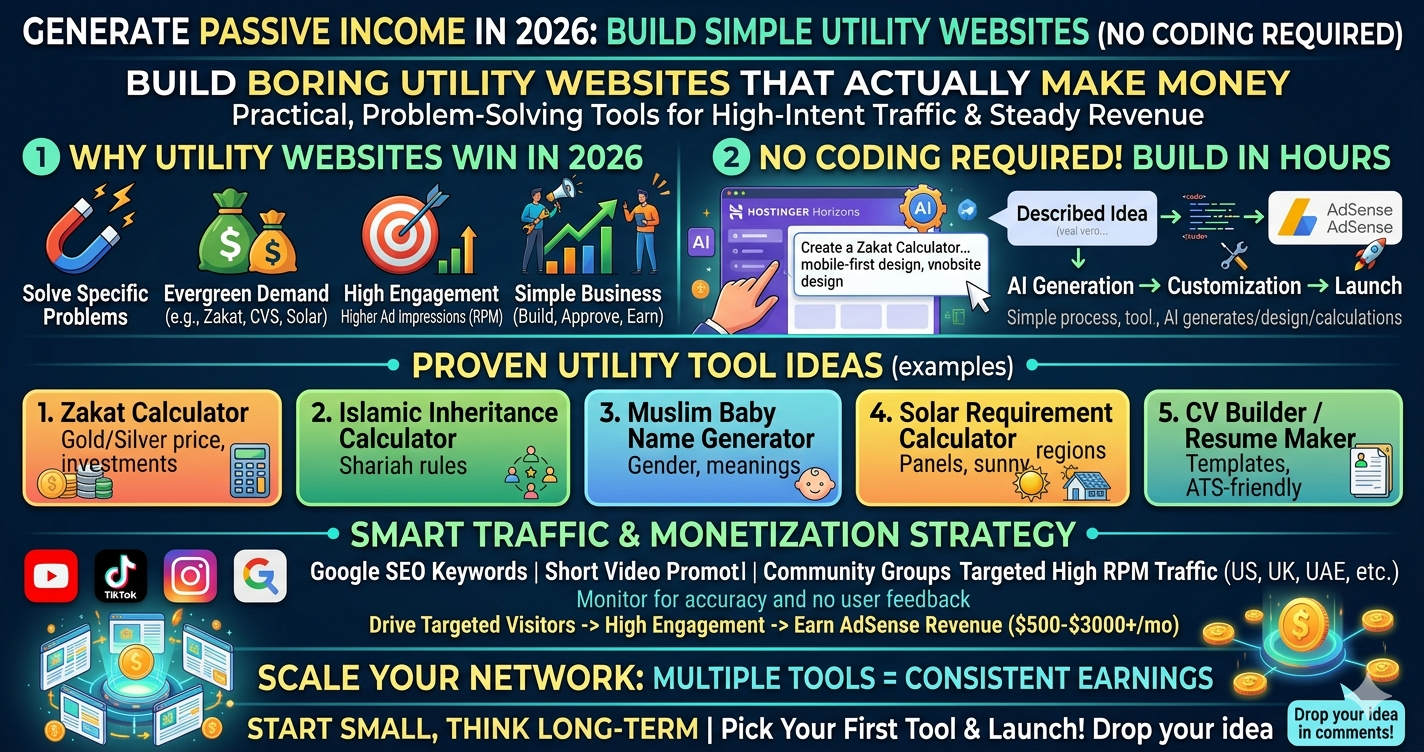
Traditional blogs have become extremely competitive. Ranking for informational keywords takes months of SEO work and ongoing content updates. Utility websites are different. They solve specific problems — calculating Zakat, building a CV, estimating solar panel needs, or generating baby names. Users come with clear intent, spend more time on the page, and often bookmark the site for future use.
This behavior translates into higher ad impressions. Google AdSense pays primarily on impressions (how many times ads are shown) rather than just clicks. A well-designed utility tool can generate revenue even if users don’t click every ad. In regions like the US, UK, Canada, and UAE, RPM (revenue per thousand impressions) can be significantly higher, making these sites especially profitable.
Another big advantage: evergreen demand. Financial calculators, health estimators, and cultural tools don’t go out of style. A good Zakat calculator, for example, will be used every Ramadan and throughout the year by Muslims worldwide.
The Simple Business Model That Works
The core idea is straightforward:
- Build a useful, mobile-friendly tool.
- Add proper pages (About, Privacy Policy, Contact).
- Get Google AdSense approval.
- Drive targeted traffic through SEO and social sharing.
- Scale by launching more tools.
You earn from display ads shown to visitors. The best part? Once the site ranks and gains traction, it can run almost on autopilot. Many creators report earning $500–$3000+ per month from a few solid tools after 6–12 months, depending on traffic and niche.
Building These Sites Without Writing a Single Line of Code
This is where 2026 makes things exciting. AI website builders have matured significantly. Tools like Hostinger Horizons let you describe what you want in plain English. For example:
“Create a clean, modern Zakat calculator website for Muslims with gold, silver, cash, and investment sections. Include Islamic rulings references, results page with breakdown, and mobile-first design.”
The AI generates the full structure, design, calculations, and even responsive layout. You can then customize colors, add your branding, and refine the logic if needed. What used to take weeks for a developer now takes a few hours.
I recommend starting simple. Focus on accurate calculations first. Test thoroughly with real numbers. Users trust tools that give correct results — accuracy builds credibility and repeat visits.
Proven Utility Tool Ideas That Are Working Right Now
Here are some high-potential ideas that combine utility with steady demand:
1. Zakat Calculator
This is a standout example. It helps users calculate their Zakat obligation based on current gold and silver prices, cash savings, investments, and other assets. Add features like yearly tracking, exportable reports, and references to authentic sources. Traffic spikes during Ramadan but remains consistent year-round, especially from Muslim-majority countries and Western expats.
2. Islamic Inheritance Calculator
A more complex but highly valuable tool. It applies Shariah inheritance rules to distribute assets among heirs. This requires careful research and disclaimers, but families dealing with estate planning will actively search for it.
3. Muslim Baby Name Generator
Parents looking for meaningful Islamic names with meanings, origins, and popularity filters. Add gender, starting letter, and modern/traditional options. This can go viral through social sharing.
4. Solar Requirement Calculator
With rising energy costs and interest in renewables, people want to know how many solar panels they need based on their electricity bill, location, and roof size. Target homeowners in sunny regions — great for high RPM traffic from developed countries.
5. CV Builder / Resume Maker
A simple, professional template-based builder tailored for specific industries or regions. Include ATS-friendly formats and tips.
Other ideas: BMI calculators with cultural adjustments, home loan affordability tools, retirement savings planners, or prayer time extensions with Qibla finder.
Smart Traffic Strategy for Higher Earnings
Don’t just rely on Google Search. While SEO is important, combine it with other channels:
- Submit your site to Google Search Console early.
- Create short, helpful videos demonstrating the tool and share on YouTube, TikTok, and Instagram Reels.
- Join relevant WhatsApp groups, Facebook communities, and forums where your audience hangs out.
- Target a mix of traffic: High-RPM countries (US, UK, Canada, Australia, UAE) alongside volume from Pakistan, India, Indonesia, and Malaysia.
Focus on long-tail keywords like “Zakat calculator with gold price 2026” or “solar panel calculator for home Pakistan.” These convert better and face less competition.
Getting Google AdSense Approval – What Actually Works
Many new sites get rejected because they look thin. To improve your chances:
- Add at least 5–10 pages of real content: detailed guides explaining how the tool works, FAQs, About Us, Privacy Policy, Terms of Service, and Contact.
- Make the site look professional and trustworthy.
- Ensure fast loading speed and mobile responsiveness.
- Publish genuine, helpful content around the tool (not just keyword stuffing).
Once approved, place ads thoughtfully — above the fold, sidebar, and after results — without hurting user experience. Poor ad placement can increase bounce rates and hurt long-term revenue.
Scaling Up: Multiple Tools Beat One Big Site
The real winners don’t put everything on one site. Launch a network of related tools under one brand or separate niche sites. Experiment to see what performs best. One tool might bring steady traffic while another goes viral seasonally.
Track analytics: Which pages have the highest time-on-site? Which countries give the best RPM? Double down on winners and improve underperformers.
Challenges You Should Prepare For
This isn’t completely hands-off. You’ll need to:
- Keep calculations accurate as prices and rules change (update gold prices regularly for Zakat tools).
- Monitor for bugs and user feedback.
- Stay updated with AdSense policies to avoid account suspension.
- Handle basic maintenance and occasional content updates.
Legal note: For sensitive topics like inheritance or finance, add clear disclaimers that your tool is for guidance only and users should consult professionals.
Final Thoughts: Start Small, Think Long-Term
Building utility websites in 2026 is one of the most accessible ways to create genuine passive income. It combines real value for users with sustainable monetization. You don’t need to be a tech genius or a marketing expert — just someone willing to solve problems and execute consistently.
Pick one tool idea that excites you or matches your knowledge. Build it this week using AI tools. Publish it properly. Drive initial traffic through friends, family, and social groups. Then move to the next one.
The creators who win are those who treat this as a real business: focus on quality, user trust, and steady growth. In a few months, you could have multiple small sites quietly earning while you sleep.
Are you ready to start? Pick your first utility tool idea and drop it in the comments below. I’d love to hear what you’re planning to build.