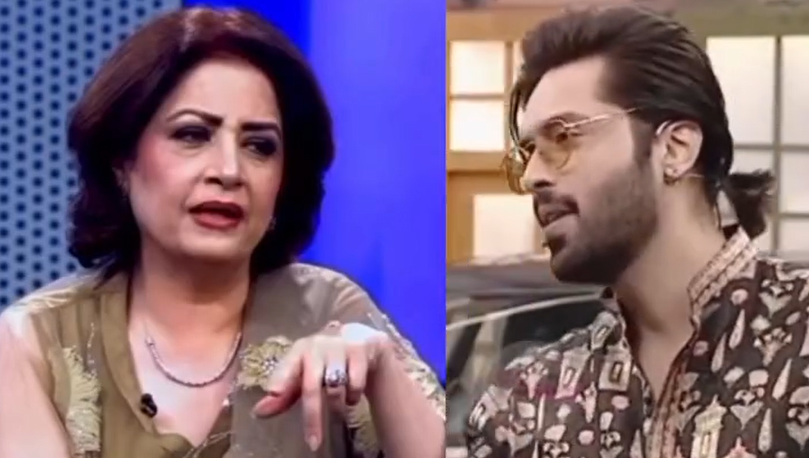
In the glitzy world of Pakistani showbiz, where dramas rule the airwaves and celebrities’ every word can spark a firestorm, few feuds have captured public attention like the recent spat between Fahad Mustafa and Atiqa Odho. What started as a seemingly innocent piece of advice on a talk show escalated into a viral controversy involving age-shaming, surgery jabs, and heated debates about gender dynamics in the industry. Fans took sides, social media exploded with opinions, and even fellow actors weighed in. But as the dust settles with public apologies from both sides, it’s worth diving deeper: What really happened? Who’s right in this mess? And how does it tie into their illustrious careers?
If you’re a fan of Pakistani dramas or just love a good celebrity drama (pun intended), stick around. We’ll break down the feud, explore their shared (and separate) professional paths, review their joint appearances, and even compare Fahad’s net worth to other stars. Plus, we’ll touch on Atiqa’s personal life, from her biography to her family. By the end, you might have a clearer picture of why this blew up—and what it says about showbiz today.
The Spark: How the Controversy Ignited
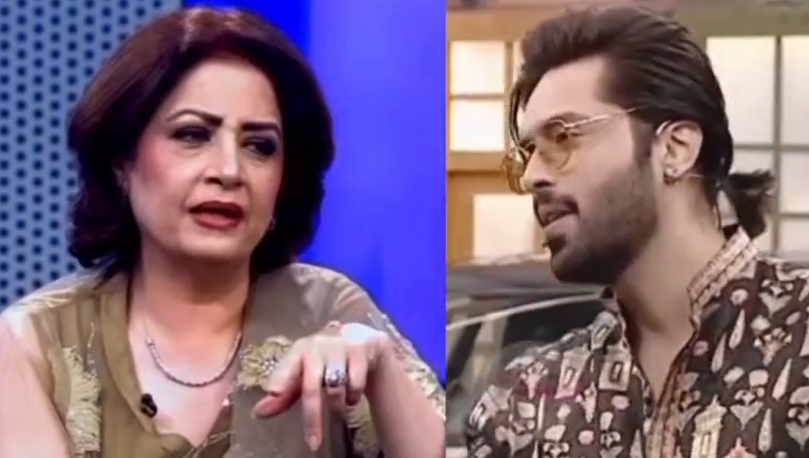
It all kicked off in February 2026 during Atiqa Odho’s appearance on Tabish Hashmi’s show, Hasna Mana Hai. The veteran actress, known for her straightforward opinions, was asked to give advice to fellow celebrities. When Fahad Mustafa’s photo popped up, Atiqa didn’t hold back. She suggested it was time for the 42-year-old star to start pairing up with actresses closer to his age, rather than much younger ones. “Ab woh waqt agaya hai apni umar ki larkiyon ke saath kaam karna shuru kardein,” she said, adding that both Fahad and Humayun Saeed were crossing into a “certain age category” where age-appropriate roles would be more fitting.
Her comments weren’t new—Atiqa has spoken out about age gaps in Pakistani dramas before, pointing out how older male actors often romance heroines half their age, while female stars face scrutiny for aging. But this time, it hit a nerve. Fahad, hosting his popular Ramazan game show Jeeto Pakistan on ARY Digital, responded during a segment with Humayun Saeed. In a sarcastic tone, he quipped, “Atiqa Apa, aap do char aur surgeries karwa len, hum aap ke saath hero ban jayenge.” Translation: “Atiqa sister, get two to four more surgeries, and we’ll act as your heroes.”
The clip went viral faster than a blockbuster drama promo. Social media users slammed Fahad for what many called ageist and sexist remarks, with actress Urwa Hocane publicly calling him out for “disrespecting” a senior star. Others defended him, saying it was just banter and that Atiqa started it by commenting on his age. The debate echoed broader issues in showbiz: Why do male actors get a pass on aging while women are pressured to look eternally youthful? And is it fair to call out casting choices in an industry built on fantasy?
Apologies and Reconciliation: A Graceful End?
Thankfully, the feud didn’t drag on. Atiqa responded gracefully, explaining that her advice was meant as praise for Fahad’s talent and hard work, not criticism. She apologized if it hurt him, emphasizing that “maafi mangne se koi chota ya bara nahi hota” (asking for forgiveness doesn’t make anyone smaller or bigger). Fahad followed suit on Jeeto Pakistan, calling Atiqa “Pakistan ki sab se khoobsurat aurat” (Pakistan’s most beautiful woman) and offering a sincere apology: “Aap hamari bari hain, hum aap ki bohot izzat karte hain. I apologize.”
Both stars handled the aftermath with class, turning a potential long-term rift into a moment of mutual respect. Fans praised their maturity, and even AI-edited romantic clips of the two from Fahad’s hit Kabhi Main Kabhi Tum went viral as a humorous twist. But the question remains: Who’s right?
Who’s Right? A Balanced Take on the Feud
Honestly, both have valid points—and both crossed a line. Atiqa’s advice highlights a real problem in Pakistani entertainment. Think about it: In Kabhi Main Kabhi Tum, Fahad (then 41) played a 20-something opposite 27-year-old Hania Aamir. Humayun Saeed, at 48, starred with 28-year-old Ayeza Khan in Mere Paas Tum Ho. These pairings reinforce unrealistic standards, where men can age gracefully (or not) while women are sidelined after 30. Atiqa, at 58, knows this firsthand; she’s advocated for better roles for mature actresses.
On the flip side, Fahad’s bruised ego led to a low blow. Suggesting surgeries was tasteless, especially since rumors swirl about his own procedures (though unconfirmed). It smacked of the double standards Atiqa was critiquing. Yet, defenders argue her initial comment was age-shaming too—implying Fahad’s “too old” for younger roles. In the end, neither is fully right or wrong; it’s a symptom of an industry that needs more diverse stories. Fawad Khan, for instance, often pairs with peers like Mahira Khan, showing it can be done.
Fahad Mustafa and Atiqa Odho’s Dramas: Any Overlaps?
While the duo hasn’t starred in a drama together (though fans dream of it post-feud), their individual bodies of work are legendary. Fahad Mustafa burst onto the scene in 2003 with Umrao Jaan Ada, but his breakthrough came with Main Abdul Qadir Hoon (2010), a coming-of-age tale that showcased his range. Hits like Kankar (2013), where he played a complex abusive husband opposite Sanam Baloch, and Dusri Bivi (2014) with Hareem Farooq cemented his status.
His most watched drama? Hands down, Kabhi Main Kabhi Tum (2024), a massive success with over a billion views on YouTube. Fahad’s chemistry with Hania Aamir was electric, despite the age gap debate. On the movie front, Na Maloom Afraad (2014) with Mohsin Abbas Haider and Urwa Hocane grossed PKR 14 crore, followed by blockbusters like Actor in Law (2016) opposite Mehwish Hayat and Jawani Phir Nahi Ani 2 (2018) with an ensemble including Mahira Khan. His famous collaborations often feature strong female leads—think Mahira in Quaid-e-Azam Zindabad (2022).
Atiqa Odho, meanwhile, debuted in the 1990s with iconic roles in Dasht (1993), a groundbreaking drama about tribal life, and Sitara Aur Mehrunissa (1992). She’s shone in family sagas like Humsafar (though in supporting roles) and more recently in Pyar Ke Sadqay (2020). No joint projects with Fahad yet, but their feud-inspired AI clips imagine them as leads in romantic plots—proving fans’ creativity knows no bounds.
Reviewing Their Joint Interviews: Tension or Camaraderie?
Joint interviews between Fahad and Atiqa are rare, but the controversy spawned plenty of indirect ones. In post-feud chats, Atiqa clarified her stance on Something Haute, saying her words were “exaggerated” and praising Fahad’s looks and work ethic. Fahad, on his show, turned apologetic and admiring. Earlier, in a 2024 interview, Atiqa revealed she turned down the role of Fahad’s mother in Kabhi Main Kabhi Tum, feeling it was for someone older—adding irony to the age debate.
These “interviews” (mostly solo responses) show respect beneath the surface. Atiqa called Fahad “kind and humble,” while he lauded her beauty. It’s a far cry from the initial sarcasm, highlighting how public pressure can lead to positive dialogue.
Fahad Mustafa’s Life in Entertainment: From Host to Mogul
Born on June 26, 1983, in Karachi to veteran actor Salahuddin Tunio, Fahad grew up in a creative family. He studied pharmacy at Baqai Medical University but dropped out for showbiz. Starting as a model, he became a household name hosting Jeeto Pakistan since 2014, blending games, celebs, and Ramazan specials.
His production house, Big Bang Entertainment (co-founded in 2008), has churned out 50+ hits like Mere Paas Tum Ho. Most watched? Kabhi Main Kabhi Tum tops the list, followed by Kankar. Famous collabs include Mehwish Hayat in films and Sanam Baloch in dramas.
Net worth? Estimates peg it at $2.5-5 million (PKR 70-140 crore), from acting (PKR 70 lakh per project), hosting, endorsements, and production. Compare that to Humayun Saeed ($50 million, thanks to Six Sigma Plus), Shaan Shahid ($20 million), or Fawad Khan ($5 million). Fahad’s wealth stems from versatility—he’s not just an actor but a brand.
Atiqa Odho’s Career and Personal Life: A Trailblazer
Atiqa Odho, born February 12, 1968, in Karachi, is a showbiz pioneer. Starting as a makeup artist, she transitioned to acting with Dasht, earning acclaim for bold roles. Her career spans over 30 years, with highlights like Nijaat (1993) and Karishma (1996). She’s also an entrepreneur with her Odho Cosmetics line and an activist for women’s rights.
Personally, Atiqa’s been married three times. Her first marriage in the 1980s produced a son; the second to a businessman ended in divorce. In 2015, she wed Samar Ali Khan, a politician, with her son’s encouragement—she even proposed! She has two children and often speaks on arranged marriages’ traumas.
Her relation with Fahad? Strictly professional, now mended post-feud. Atiqa’s praised younger stars like Wahaj Ali but calls out industry biases.
Lessons from the Feud
This Fahad-Atiqa saga reminds us that showbiz isn’t just glamour—it’s a mirror to societal issues like ageism and respect. Both emerged stronger, with apologies showing maturity. Fahad continues dominating with versatile roles, while Atiqa inspires as a veteran voice. Whether they collaborate someday or not, their legacies in Pakistani dramas are secure.
What do you think—who’s right? Drop your thoughts below. And if you’re craving more drama recs, check out Fahad’s Kabhi Main Kabhi Tum or Atiqa’s classics. Stay tuned for more showbiz scoops!